
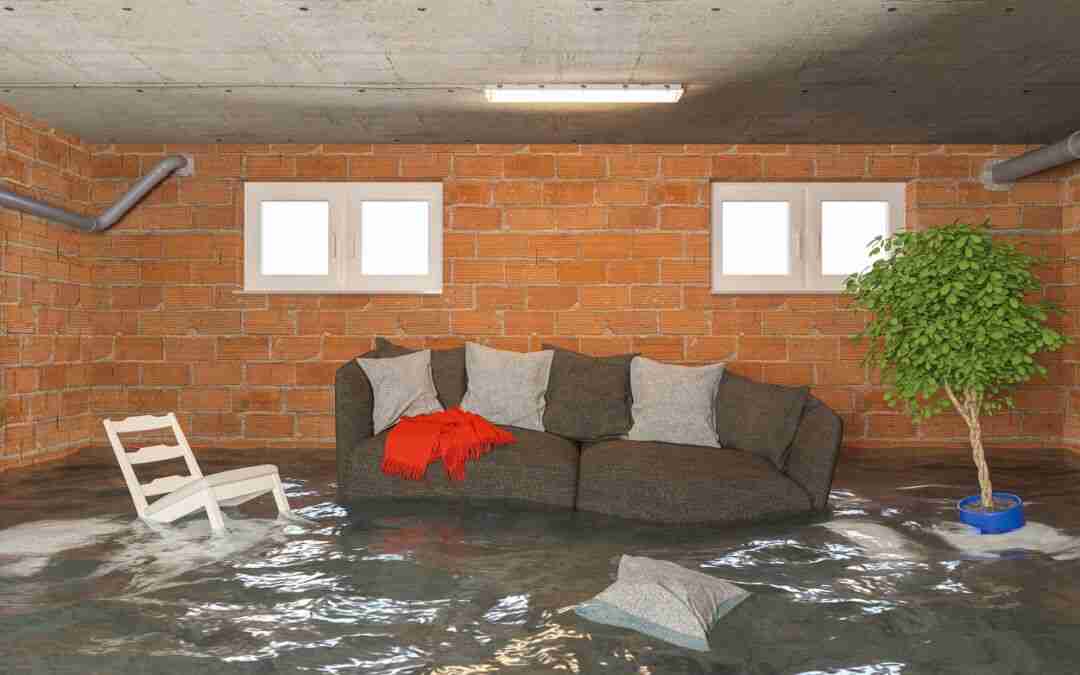
A wet basement can quickly turn from a minor nuisance into a major headache. Whether it’s a little moisture after a storm or standing water seeping through the floor, knowing how to handle water in the basement is essential for every homeowner.
Left unchecked, it can lead to mold, structural damage, and ruined belongings. But the good news? You don’t need to panic.
With the right approach and some practical know-how, you can tackle the problem head-on.
In this guide, we’ll walk you through what to do when water shows up downstairs and how to keep it from coming back.
How to Handle Water in the Basement Effectively
Some homeowners interested in remodeling their basement are concerned with existing water issues in the space.
Our Northern Virginia General Contractor Company has the knowledge and expertise to help our clients through water issues ranging from simple to the more complicated.
Ideally, the goal is to find the best solution to help achieve the end goal of creating an amazing space for our clients.
Some steps to evaluating these concerns are listed here.
1. Evaluate the perimeter of your house
Ensure that the ground next to your foundation slopes away from the foundation, not towards it.
Back filled dirt around the foundation will typically settle lower than the surrounding dirt causing the ground to sink in and slope towards your house.
If necessary, add dirt up against the foundation to create at least a 2″ per foot (that is, a drop of 2″ for each foot you move away) slope against the foundation.
Make sure that the top of the dirt is at least six inches below the sill plate so that no ground contact exists which may cause certain building materials to rot in the future.
2. Make sure your gutters are clean
Regularly maintain and clean out your gutters and make sure your downspouts are discharging their water at least 5 feet away from your foundation.
3. Watch out for shrubs and other plants that are too close to your foundation
Rotted roots can create a path for surface water to flow down to your foundation.
You should keep plantings at least 12″ away from the foundation and on a slight slope to direct water away from your foundation.
4. Repair defects in poured concrete walls
Defects in concrete walls such as cracks and the places where pipes and form tie rods go through the concrete need to be repaired and maintained.
If you see a crack in a concrete wall it goes all the way through the wall to the outside and is a potential source of water. For cracks that will not experience any thermal or structural movement, you can use an injection of construction-grade epoxy that penetrates the crack all the way from inside to outside, bottom to top.
Generally, an experienced crack repair technician is the best choice for this. Do-it-yourself kits of epoxy and polyurethane systems are available, but are less reliable.
5. Consider installing a sump
A sump is essentially a hole in your basement floor which contains a pump.
When the water level in the sump rises too high, a pump kicks on and draws the water out of the sump, discharging it outside the house, usually 10 or more feet from the foundation.
Installing a sump requires a moderate degree of skill and experience, since it involves jack hammering or otherwise creating a hole in the concrete floor of your basement, excavating a hole, placing a liner in the hole, wiring the sump pump itself, and plumbing an outlet from the pump to the outdoors.
7. Try a French drain for serious water issues
A French drain consists of a continuous system of piping, running beneath the floor of the basement and along the entire perimeter of the basement.
Installing a French drain is similar to installing a sump, but requires cutting and removing an approximately 12″ wide strip of basement floor along the entire perimeter of the basement, digging a 12″ deep trench, filling it with coarse gravel surrounding the drain pipe, then re-pouring a concrete floor to cover it all up.
A French drain will always include a sump and pump for removing any water which gets into the drain system.
7. Have a professional inject Hydroclay around of your foundation
Hydroclay is a waterproofing version of Bentonite Clay, known for its ability to absorb large amounts of water.
Usually pumped from the outside, the clay fills in voids and follows the pathways water uses to get inside your foundation permanently sealing the basement.
Each of these ideas offers potential solutions to a basement’s water issues. The uniqueness of each property’s soil type or external material can result in varying effectiveness of each of these solutions.
If you are concerned about these issues, speak with USA Handyman Services to ensure that the steps you take to waterproof are effective.




0 Comments